
Book excerpt tiktok ban trump kpop stans
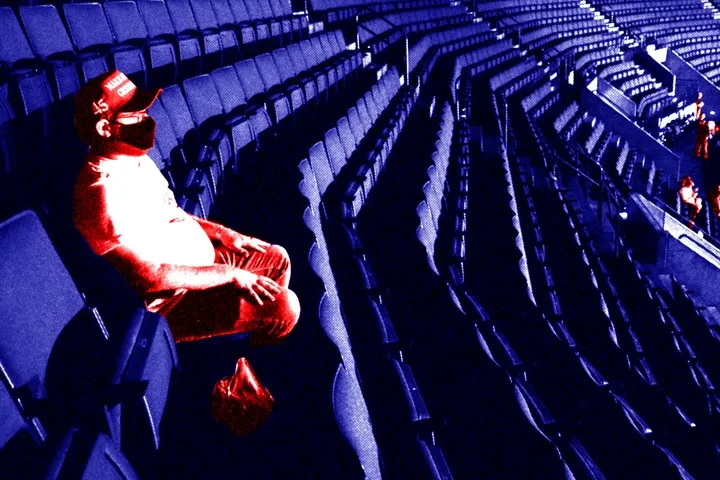
When Donald Trump returned to the White House earlier this year, it seemed TikTok’s future in the U.S. was already decided. Congress had passed legislation, and Joe Biden had signed it into law, requiring the app to either be fully banned from the U.S. market or sold off by the day before Biden’s inauguration. But Trump instead announced he would effectively pause enforcement of that law. Rather than forcing a ban or immediate sale, he said he would “save” TikTok by negotiating a last-minute sale deal.
Now that deal has come into clear focus. Last week, the White House unveiled a framework that would see TikTok’s Chinese parent company ByteDance license a copy of the app’s core algorithm to a consortium of U.S. investors, at least some of whom are prominent, outspoken backers of Trump’s political agenda. If the deal is finalized, TikTok’s U.S. operations would end up controlled by major Trump allies, at a time of unprecedented consolidation in the American media landscape.
But even if this handover goes through, it will upend the cultural identity that defined TikTok in its early years. This excerpt from my book Every Screen On the Planet: The War Over TikTok recounts one of the platform’s earliest and most high-profile clashes with Trump: when a group of young TikTok users organized a prank to tank attendance at one of his 2020 campaign rallies. At the time, the stunt was mostly written off as a lighthearted joke—but it also foreshadowed the outsize influence TikTok and its user base would have on U.S. politics for years to come.
Kevin Mayer stands six-foot-four, with a square jaw, light-colored eyes, and a deep, resonant voice. Built like an offensive tackle—a position he actually played on MIT’s college football team—he also has the unorthodox habit of sending emails with all-caps subject lines. When ByteDance founder Zhang Yiming first reached out to him to lead TikTok as CEO, Mayer had spent more than two decades as a top executive at Disney, where he had risen to helm the Disney+ streaming platform. He was even considered a leading candidate to replace the company’s legendary CEO Bob Iger when Iger stepped down in early 2020. But Mayer, who earned the nickname “Buzz Lightyear” for his demeanor and chiseled jawline that mirrored the Disney Pixar character, was passed over for the top job.
Zhang approached Mayer at the start of the COVID-19 pandemic. Disney’s business prospects had collapsed as movie theaters across the country closed their doors. But TikTok was growing exponentially, and Mayer, then 58, decided to take a chance on the fast-moving platform. “I’m not getting any younger,” he told associates at the time.
In May 2020, Mayer accepted the dual roles of global CEO of TikTok and chief operating officer of ByteDance. In many ways, TikTok shared more core traits with streaming services like Disney+ and Netflix than it did with established social platforms like Facebook or Google. Of course, user-generated short-form content was a completely new space for Mayer. But the core challenge—understanding what viewers engage with, and convincing them to spend more time on the platform—was familiar to him, as was the work of courting advertisers and proving the platform delivered strong returns on their ad spend.
Mayer was sharp, energetic, and strong with data. “Every meeting with Kevin was full of energy,” recalled one senior executive who worked alongside him. He was more assertive than Alex Zhu, TikTok’s previous leader, and he wasn’t a software engineer, which actually worked out well for the role. It meant he rarely pushed for strong, specific opinions on how TikTok’s underlying technology should be built—a topic Zhang Yiming already held clear, firm views on. That let Mayer focus on high-level executive decision-making, and project confidence and competence to TikTok’s staff and the broader public.
For many ByteDance employees, Mayer’s hire signaled that an initial public offering (IPO) was on the horizon. IPOs are how private companies go public, letting early investors and employees sell their shares for cash. Going public is the ultimate milestone of success for a startup, and most of ByteDance’s competitors, in both the U.S. and China, had already generated huge windfalls for stakeholders via public listings.
In Silicon Valley, it’s widely understood that IPOs create thousands of millionaires. Engineers, marketing leaders, designers, and lawyers leave stable corporate jobs to roll the dice at startups: the company could fail, but if it succeeds and goes public or gets acquired, they could walk away wealthy. At most tech companies, including ByteDance, a portion of employees’ compensation comes in the form of company stock. For private companies, that stock is essentially a stack of lottery tickets: it could be worthless, or it could change your life. If the company goes public, employees can sell their shares on the open market, turning those lottery tickets into hundreds of thousands or even millions of dollars overnight.
Within two months of the 2020 lockdowns, it was already clear TikTok was a runaway success, and ByteDance was not at risk of suddenly shutting down its U.S. operations. Still, many U.S.-based employees were uneasy that the company’s Chinese roots would block it from reaching its full potential. Working for a global company felt exciting for TikTok’s young U.S. workforce—cafeteria Chinese food was a fun change of pace, as were cash-filled red envelopes for Lunar New Year. But as Trump baselessly referred to COVID-19 as the “Kung Flu” and hate crimes against Asian Americans surged across the country, many employees worried: Would the U.S. government even allow TikTok to pull off an IPO? What if the listing happened in China instead of the U.S.? How would that change employees’ ability to cash out their stock?
U.S. ByteDance employees trusted “Buzz Lightyear” to answer these questions. Mayer “was the deal guy,” one American executive who worked with him told me, referencing his track record of building major partnerships at Disney. “He was the deal guy brought in to take it public.”
That executive and many other U.S. staff also hoped Mayer would Americanize TikTok’s workplace culture in other ways. They expected he would shift the company’s center of power away from Beijing, doing away with Chinese-language Lark work chats, Sunday night meetings, and public-shaming mass emails. U.S. employees wanted Pacific Time to become TikTok’s official time zone, and English to be the default working language. Put simply, they wanted to work at what felt like a “normal” U.S. tech company. Most of all, they hoped Mayer would finally bring clarity to the question of who was ultimately in charge of the U.S. business.
But before Mayer even opened his new work laptop, everything went off the rails.
On May 25, 2020, a white Minneapolis police officer named Derek Chauvin knelt on the neck of George Floyd, a 46-year-old Black man, killing him. A 17-year-old bystander posted a video of the murder to Facebook, and it quickly went viral across every major social platform.
Floyd’s murder was a defining moment for the open internet. The teen who filmed the killing was awarded a special citation by the Pulitzer Prize Board. Platforms around the world struggled with what to do: hosting graphic footage of a murder was problematic, but blocking or suppressing the video would have been far worse, drawing widespread condemnation for censorship.
Protests and vigils honoring Floyd first popped up in Minneapolis, then spread across the country, with thousands of marchers chanting Floyd’s final words: “I can’t breathe.” For many demonstrators, these gatherings were their first time out in public since the start of the pandemic—their first time leaving isolation, taking public transit, or being in close contact with anyone outside their immediate household. Emotions were raw and overwhelming: the empowering thrill of mass solidarity mixed with the very real risk of COVID exposure, amplified by the heavy police presence at most marches.
At a protest in Williamsburg, Brooklyn in late May, a progressive organizer named Abby Loisel spotted a young boy standing on a rock, watching protesters pass by. Loisel, who described attending that protest that week as “an out of body experience,” asked the boy’s mother for permission to film the moment, and captured a protester giving the boy a fist bump as they walked by. “I just thought it was really sweet,” she said. She set the clip to Childish Gambino’s “This Is America” and posted it to TikTok later that day.
Other protest videos quickly gained traction on the platform too. Footage of burning cars and looted stores began circulating, clashing with solidarity posts from people who had stayed home out of COVID fear. Celebrities and politicians weighed in on the unrest, and Trump threatened to deploy the military to shut down the protests—a dramatic threat that only escalated tensions.
TikTok’s For You algorithm leaned hard into every angle of the George Floyd protests. ByteDance’s algorithm was designed to identify emerging trends: new topics that large numbers of users were suddenly posting about and engaging with. It especially prioritized videos that used trending new music. “This Is America” quickly became the unofficial anthem of that summer’s protest movement, and a mass social movement had all the qualities that made content go viral on TikTok. But Floyd’s murder pushed the platform in a direction that Alex Zhu had always wanted to avoid.
Floyd was killed one week after Zhang Yiming announced Mayer’s hire at TikTok, and one week before Mayer was set to start his new role. Mayer was not a political figure; he was a seasoned media dealmaker who envisioned TikTok as a polished, professional entertainment platform—not a messy, fraught space for debates over race and policing.
Mayer later described his early days at TikTok as a period of massive cultural shift for the platform: before Floyd’s murder, he said, the app had been “happy and joy all over.” But after Floyd’s killing, everything changed. The For You algorithm had learned something new: it had encountered a new kind of trend, one that packed far more power than even the most viral teen lip-sync video.
A few weeks into his tenure as CEO, Mayer acknowledged the platform’s shift during a webinar with entertainment consultant Peter Csathy. “Maybe the most important thing isn’t joy, it’s social justice. … We have the responsibility to be that platform when people want to express their anger and belief in social justice,” he said.
Zhu’s long-held warning about getting pulled into politics hung over Mayer’s first weeks on the job. But Mayer had little choice in the matter. If TikTok had tried to restrict discussion of Floyd’s murder, it would have been accused of censorship and indifference to the racial justice movement that every major U.S. Fortune 500 company was publicly lining up to support. Neither Zhang nor Mayer could force TikTok to stay out of politics at a moment when the platform’s own users were out marching in the streets. So on his first day in office, Mayer released a public statement endorsing the protest movement.
The summer of 2020 is remembered for racial justice uprisings and COVID lockdowns, but it also gave way to the most unusual presidential campaign in modern U.S. history. Social distancing rules made traditional door-to-door canvassing and large campaign rallies impossible. So the race between incumbent populist Republican Donald Trump and centrist Democrat Joe Biden unfolded almost entirely online and on television.
TikTok played a very limited role in the 2020 election at first. Company leadership wanted nothing to do with electoral politics, and most politicians also avoided the platform over its Chinese origins. Both the Democratic and Republican National Committees advised candidates and staff not to use TikTok, and asked them to delete the app from their devices and deactivate their personal accounts. A group of Republican senators even introduced and passed legislation banning TikTok on all federal government devices.
Mayer had inherited TikTok’s policy of rejecting paid political ads. But his team couldn’t monitor activity that happened off the platform, so opportunistic politicians and political strategists began paying TikTok influencers and creators to post pro-candidate content on their personal accounts. Because TikTok didn’t ban political speech entirely, and couldn’t easily identify which posts were secretly paid, it couldn’t enforce its ad policies and remove the content.
Still, for the first half of 2020, TikTok largely stayed out of the national political spotlight. Its user base was overwhelmingly young—many were too young to even vote. One internal company document from early 2020 showed that more than a third of U.S. TikTok users were 14 or younger. Of those who could vote, most were still under 35, a demographic that was largely unenthusiastic about both Trump and Biden.
That all changed when Trump decided to resume his signature in-person campaign rallies. The all-digital campaign format had benefited Biden: it protected him from the strains of in-person campaigning and unscripted gaffes, while letting his disciplined digital team frame him as a steady, reasonable moderate. Trump, who won the 2016 election on the back of raucous, packed rallies, suffered under the virtual campaign format. By June 2020, as the public grew tired of COVID restrictions, he announced he would bring back his rally tour, with the first event scheduled for June 19 at the BOK Center in Tulsa, Oklahoma.
The announcement sparked immediate controversy for two key reasons. The first was COVID. At that point in 2020, months before vaccines were available, the virus killed or caused permanent disability in a large share of infected people. Packing thousands of people into an enclosed indoor arena violated guidance from the World Health Organization, the CDC, and nearly every other major public health body. Holding the rally at all was an act of defiance, a statement that personal freedom trumped what Trump supporters saw as overreaching bureaucratic public health rules.
The rally was also scheduled for Juneteenth, the holiday honoring the end of chattel slavery in the U.S., and it was held in Tulsa, the site of the 1921 Tulsa race massacre, one of the worst acts of racial terror in U.S. history. Trump had long been dogged by accusations of racism: the federal government once sued his real estate company for discriminatory housing practices, he publicly pushed for the wrongful conviction of five Black and Latino teens accused of a crime in Central Park, and a former colleague recalled him using the N-word on the set of The Apprentice. So when he announced the date and location of his comeback rally, many questioned whether the choice reflected cruel indifference, or deliberate animosity.
The Trump campaign later moved the rally back one day to June 20, but the damage was already done. On June 11, the day after Trump first announced the rally, political commentator and reality TV star Quentin Jiles posted a TikTok laying out why the date and location were offensive: “Not only is this man totally insensitive to the moment, I think it’s a doubling down. Because we know where his heart is. We know he’s a racist.”
The video got just under 10,000 likes, which was typical for Jiles given his celebrity following at the time. But in the comments, followers started saying they had already reserved free tickets for the rally with no intention of attending. “Don’t worry we got your back!” one commenter wrote. “Already rsvp’ed my free tickets. That rally will be at minimum capacity, go get your two free tickets right now!” Commenters then shared the link to the ticket reservation page on Trump’s campaign website, and thousands of reservations started pouring in from people who never planned to show up.
A few hours after Jiles posted his video, another TikToker joined the campaign. Mary Jo Laupp, a 51-year-old high school theater director from Fort Dodge, Iowa, posted a follow-up video calling the rally “a slap in the face to the Black community.” She urged her small following—around 1,000 followers at the time—to learn about Juneteenth and the Tulsa race massacre. But she didn’t stop there.
“Somebody on another TikTok post commented that [Trump] was offering two free tickets on his campaign website to go to this rally, so I went and investigated it,” Laupp said, speaking quickly and firmly to the camera. “It’s two free tickets per cell phone number, so, I recommend that all of us that want to see this 19,000 seat auditorium barely filled or completely empty go reserve tickets now, and leave him standing alone on the stage. Whadda ya say?”
Every so often, an online trend gains enough momentum to break out of social media and reshape real-world events—and that’s exactly what happened after Laupp posted her video. It racked up more than 2 million views and thousands of comments in just a few days, and many of the comments were a single word: algorithm.
Laupp’s followers were doing something new for TikTok: they were turning the platform’s own recommendation algorithm against the status quo, making it work for their collective goal instead of just letting it shape their feeds. They understood that TikTok runs almost entirely on revealed user engagement, rather than stated preferences, so they found a creative way to signal to the algorithm that the post should be pushed to more users.
To be clear: the algorithm wasn’t responding to the word “algorithm” as if users were calling its name. Users just understood that behind the interface, TikTok (like Instagram, Facebook, and Twitter) is essentially a complex algorithm that adds up a range of engagement signals to decide how many people a post should reach. Just by commenting anything on the post, they boosted the post’s engagement score, which made the algorithm show it to more users.
One comment in particular got more than 70,000 likes. It came from a 21-year-old user named Yesenia, who had only ever posted one video to the platform. Her comment read: “Bro get kpop stan on this.”
For those unfamiliar, K-pop stans are superfans of Korean pop groups like BTS and BLACKPINK. There are millions of them in the U.S. and around the world, and they are mostly young, deeply passionate, and extremely active online. In summer 2020, K-pop stans had already gained national attention for disrupting bigoted online movements by “flooding the zone” with K-pop content.
The week before Trump announced his Tulsa rally, a group of white supremacists started posting on Twitter using the hashtag #whitelivesmatter. Within hours, the hashtag’s usage skyrocketed—but anyone who clicked on it found nothing but photos and videos of K-pop idols, their songs, and their choreography. The racist organizers, overwhelmed, moved to new hashtags #whitelifematters and #whiteoutwednesday, only to see those flooded with K-pop content too.
A week before that, K-pop fans had targeted the Dallas Police Department, which had launched an app letting users submit reports of “illegal activity from the protests” after Floyd’s murder. A 16-year-old K-pop fan tweeted asking her followers to “FLOOD that shit” with clips of K-pop stars. “Make it SO HARD for them to find anything besides our faves dancing,” she wrote. The next day, the Dallas Police Department announced its iWatch app had experienced “technical difficulties” and was taken offline.
Just minutes after Yesenia called on K-pop stans