
Ai journalism worst thing about ai
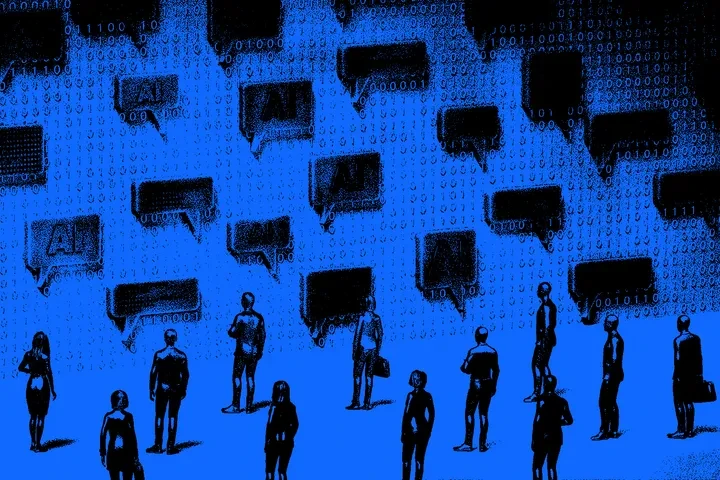
I’ve dodged this assignment more times than I can count, using every trick in the book. I kept arguing that not every special issue needs a note from the editor, after all. I was swamped: cutting a new podcast, prepping a keynote for a tech conference, keeping up with eating and sleeping, raising my kids, doodling through meetings, rewriting my to-do list for the third time that week, even stopping to retie my shoelaces just to kill more time.
I tried to signal to my editor that I was already stretched thin. To be honest, my approach was pretty understated: I just stopped replying to his emails. In my head, I could retreat to some ghostly dimension where AI wasn’t being crammed down my throat every waking minute of every day.
Like a lot of men before him, he didn’t take the hint. “Don’t frame this as an editor’s letter,” he wrote back. “Think of it as a short essay for our AI package! I know you don’t want WIRED to crank out some stuffy AI manifesto.”
And he’s right — I don’t. Here’s the thing: When I interviewed for this role back in July 2023, every single person on the hiring panel asked me how I’d cover AI. Since I started, I’ve been absolutely flooded — drowning, water pouring up my nose and filling my lungs, flooded — with demands for my hot take on this technology. PR and comms professionals want it. Every major conference organizer on the entire planet wants it. My dad has questions. David Remnick has questions. Every other journalist under the sun has asked me for my take, too, which is just one more entry on the very long list of reasons I will never, ever attend another media industry party. My neighbor? Wants to know if I think AI will end the world. My dermatologist? Just got a new AI diagnostic tool and is dying to hear my thoughts. Even my dogs? They’re GPT-curious.
Thankfully, there are still living creatures who don’t care what I think about AI. My husband is too busy making AI-generated short films on his phone to care what his wife — who’s constantly yelling at him to put the screen down — thinks about AI for work. And thank God, every person on staff at WIRED already implicitly gets what I get about AI: this technology has been around, improving and evolving, for decades. The current AI frenzy specifically centers on the deep-learning method of training models on massive troves of existing data. Sure, it can sound technically daunting. But at the end of the day, it’s really not that earth-shatteringly profound. Unless you’re mainlining the nonstop hype pumped out by celebrity tech founders like Sam Altman and Dario Amodei — and if you are, why are you even reading this? Go get your bunker ready!
The truth is, AI isn’t some brand-new invention. It’s not a magical fix for every problem we have, nor is it the apocalyptic destroyer of all worlds (and all jobs) that so many people warn us about. Training, deploying, and commercializing AI is incredibly expensive and resource-heavy — and then you just have to do it all over again: more data, new models, bigger promises, scarier warnings, on and on forever, until we all move on to obsessing over quantum computing in a few years.
Generative AI is actually useful in some specific contexts, completely useless in many others, and largely unproven in most. It depends entirely on the situation. It’s not some single, uniform monolith. More and more indicators point to it being an economic bubble right now. When that bubble pops, it could be chaotic for a while. But even after that, meaningful, interesting parts of AI technology will remain, and they’ll keep shaping parts of our lives. There is real substance there, don’t get me wrong. But can we please stop letting AI write our emails for us? We can all write our own damn emails. Yep, this is the hot take you’ve all been waiting for.
What about journalism, then? Is generative AI going to demolish our industry, trashing the whole craft of human-led reporting and storytelling? Well, that depends who you ask. Ask Google, and they’ll swear that sending traffic and revenue to publishers to spread accurate information has never mattered more. Then they’ll roll out new AI-powered features that hurt both their own search product and the publications they’ve held captive in a decades-long abusive relationship. Right now, if a publisher wants to walk away from Google, it means either taking a massive financial hit or closing up shop for good.
Meta and Mark Zuckerberg have a different angle. After yanking the revenue rug out from under news outlets over and over in recent years, squeezing publishers financially all over the globe, turning Facebook into a bizarre meme convention for your MAGA aunt and Threads into an apolitical social app I haven’t thought about in 12 months, the company just launched a “feed of creative AI-generated videos from artists and creators.” Which is basically just garbage. Total crap, if we’re being honest. And they can’t even do that half as well as OpenAI’s Sora can.
At WIRED, we will use AI sometimes. Down the line, it might help us with basic copyediting. Already, we use it for research (always carefully fact-checked by humans, for the record) and brainstorming — it’s basically the automated equivalent of a fairly unremarkable intern. What’s more, machine learning tools that existed long before this current hype wave have long been helpful for investigative work. But digging up and sharing new, newsworthy information? Nailing that exact turn of phrase that says exactly what you mean, perfectly beautifully? The illustration that makes you want to ~chef’s kiss~ in a team meeting, because you can’t wait for the issue to hit print so the world (well, the part of the world that still subscribes to print) can see what you made? That’s human work, done by humans for humans. We use technology to augment that work where it makes sense, and skip it where it doesn’t. That’s what we do now, and that’s what we’ll keep doing.
My advice to WIRED readers is this: keep an open mind. You should learn about AI right now, and learn how to use some of the tools you keep hearing about. Get the basics down, and dig deeper if you find it interesting or useful for your life. But whatever you do: don’t become friends with AI, and don’t have cybersex with it. For the love of all that’s holy, we all already have enough problems. Make sure your kids still have human teachers. And for God’s sake, relax. The world is always changing; technology didn’t start with ChatGPT. The worst thing about AI right now might just be that we can’t stop talking about it.
I could keep going, but I actually have to run. Like I said at the start: not every package needs an editor’s letter, and I’ve got a mole on my back that needs a second opinion — from a human, thank you very much.