
The Unlikely Prophet of Tech Pessimism: Ed Zitron Is Poking Holes in the AI Bubble—While Pitching AI Companies
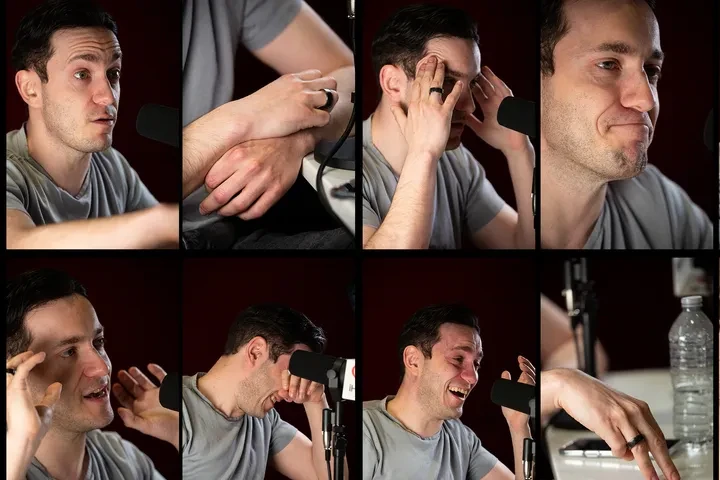
The Unlikely Prophet of Tech Pessimism: Ed Zitron Is Poking Holes in the AI Bubble—While Pitching AI Companies
By [Original Publication, adapted]
By day, Ed Zitron runs EZPR, a small boutique public relations firm. That fact often surprises people who know him from his podcast, social media, or subscriber newsletter—where he pulls no punches, calling Sam Altman “full of shit” and labeling Mark Zuckerberg a “putrid ghoul.” By unwritten industry rule, PR flacks don’t talk like this. Typically, they send polite, hedged emails to the few reporters bold enough to use that kind of language, reaching out to “connect,” hop on a call, and walk back claims that their CEO is, in Zitron’s memorable phrasing, a “chunderfuck.”
“That really is one of the things with guys like Sam Altman and Dario Amodei from Anthropic,” Zitron told me over burgers on a crisp September afternoon in Manhattan. “I work with founders all the time. I guess I’m a founder myself—I don’t love the title. But when you run a business where you have to make more than you lose just to stay open, and you watch these chunderfucks blow through $5 or $10 billion a year… and everyone celebrates them for it? It’s offensive.”
We were talking about whether his unapologetic takedowns of the AI industry have hurt his PR business, and Zitron says they haven’t. Only one client ever pushed back, arguing he’d been unnecessarily harsh to Altman—OpenAI’s CEO, who Zitron considers the worst of the worst. The client pointed out that building a company from scratch is hard work. Zitron tells me his response was straightforward: “I appreciate the comment, but, like, this isn’t about you. His company is burning billions of dollars. He’s a terrible businessman.”
This kind of unfiltered, personally aggrieved takedown is classic Zitron: populist anger from a small business owner calling out the unpunished waste of big tech. (One has to wonder: would these CEOs feel any less offensive if their companies were actually turning a profit?) He’s built an unlikely media empire out of this sharp, biting commentary. His weekly podcast Better Offline, which explores how tech shapes and manipulates modern society, has cracked Spotify’s top 20 tech shows. His newsletter, Ed Zitron’s Where’s Your Ed At, has grown to more than 80,000 subscribers. His media footprint also includes an active Bluesky account, a football podcast, occasional baseball writing, a lively community on the r/BetterOffline subreddit, and a book coming next year about “why everything stopped working,” as he puts it. Across mainstream outlets, he’s become the go-to commentator for AI skepticism. When Slate’s What’s Next: TBD or WNYC’s On the Media want a guest to talk about the bursting of the AI bubble, they call Zitron. It’s not just the volume of his work that made him a name—it’s the angry, unapologetic edge he brings to criticizing both media personalities and tech titans alike.
Not long ago, that volume and style combined to create the defining Zitron work: a 15,000-word newsletter essay titled “How to Argue With an AI Booster.”
He’s developed a devoted fanbase that calls themselves Edheads. Nearly 200 people have dropped $24 on a custom Better Offline challenge coin engraved with Zitron’s now-iconic mantra: “NEVER FORGIVE THEM FOR WHAT THEY'VE DONE TO THE COMPUTER.” I’ve seen one fan turn Zitron’s lines into a motivational poster, equal parts earnest and ironic. A Threads user wrote openly about her “parasocial crush on a tech critic & writer” who is clearly Zitron, even unnamed. She sighed: “I just want him to take me to dinner, take me gently but firmly by the hand, and tell me in his confusing, muddled British accent to throw away my goddamn phone. This would fix me. I’m sure of it.” As one tech journalist who saw the post put it to me: “If your writing is making people lust after you, you’re doing something either very right or very wrong.”
Functionally, Zitron is filling a clear gap: there’s huge demand for a strong countervoice to the omnipresent AI hype machine. AI critics come from all angles: doomers who warn the industry is building world-ending superintelligence, and denialists who argue AI will never replace human judgment. Zitron offers something different. In an era of unapologetic AI boosterism and widespread disgust with big tech, he gives his audience a moral framework for hating generative AI. “He approaches the subject like a journalist—he’s ravenous for information—but he’s not tied down by old media institutions,” says Allison Morrow, a CNN business reporter and frequent Better Offline guest. “Most journalists don’t want to root for an industry’s collapse. The outlets we work for don’t want us to take that kind of stance.”
More importantly, for his followers, Zitron promises the satisfying comeuppance that tech’s critics have been waiting for. He offers a sense of justice for an audience that rarely sees any accountability for big tech. “I do not think this is a real industry,” he has written, “and I believe that if we pulled the plug on the venture capital aspect tomorrow it would evaporate.” When On the Media asked how he could be so sure a collapse is coming, he replied simply: “I feel it in my soul.” His analysis might stumble on the finer technical points, like the specifics of AI inference costs, but that doesn’t weaken his core message: Judgment Day for AI hype is just over the horizon. What gets overlooked in all his fiery criticism is the obvious contradiction at the heart of his work—one Zitron doesn’t hide, but rarely talks about: part of his living comes from promoting AI companies. Can a PR flack also be a populist prophet calling out the bubble?
A Lonely Childhood Built Connection Through the Computer
Today, Zitron splits his time between New York City and Las Vegas. At 39, he spent the first half of his life in England and the second in the U.S., developing a love for ragged, distinctly American pastimes like minor-league baseball and the Las Vegas Raiders. But much of Zitron’s worldview as the AI boom’s most vocal Cassandra was shaped by his lonely adolescence in London. He describes himself as a “very fat and not particularly bright child” who had almost no friends, unlucky enough to attend a school dominated by theater kids and academic overachievers. “From pretty much the moment I walked in to the moment I walked out,” he says, “I was bullied.”
His first real friends came through computers. His father had a laptop with a PCMCIA card, and Zitron would dial up to play Ultima Online and EverQuest, hanging out in mIRC chat rooms for the games. “My initial experience with the internet was just kind of wonderment, but also wonderment at the chaos,” he says. “It wasn’t like I thought, ‘This is perfect.’” He was drawn to all the “real freaks” who had made the internet their home, interacting in a space that felt far more egalitarian than any part of his offline life.
Out of that lonely childhood, where he found connection through technology that he couldn’t get in person, grew a deep reverence for what the internet could be—one that still shapes his work today. He believes technology drives social change, not the other way around; that at its core, technology is connection itself. Seen through that lens, it’s easy to understand where his deep personal outrage comes from. Misusing tech, exploiting it for personal or class gain, robs people of the gift he found in those old chat rooms with the freaks: the chance to connect with other people. It makes you just the kind of person he hated growing up: a bully. When he says “never forgive them for what they’ve done to the computer,” it sounds a lot like “never forgive them for what they did to me.”
The once-lonely kid now talks openly and warmly about his wide circle of friends, calling them his good mates, dear mates, best mates. During CES in Las Vegas, Zitron recorded his podcast from a makeshift hotel room studio, logging 13 and a half hours of content, with guest after guest dropping by like it was a casual variety show. CES was a personal triumph for him. Near the end of his final episode, as he thanked everyone who’d joined, he got choked up. “I was telling everyone how much I love them,” he tells me, a little embarrassed. “I think we need way more of that in fucking media. We need more friendship.”
From PR Flack to Media Commentator
That focus on friendship shaped how he approached PR too. Zitron entered the industry in 2008, after studying communications at Penn State and a short stint back in London writing about video games for PC Zone. He worked unhappily at a big New York PR firm, then became communications director for Hometalk, a startup social platform for home improvement. He made a point of building personal relationships with reporters, a philosophy he laid out in his first book, This Is How You Pitch: How to Kick Ass in Your First Years of PR: “Getting to know your contacts on a personal level is a great way to make friends out of the people—like bloggers and journalists—who cover the industry. Let them be the one to bring up your field or your client. It will make you appear human, rather than just another hungry flack looking to get a story planted.”
That sounds cynical on the page, but it’s worked for him. Tech bloggers who can’t remember Zitron ever pitching them still recall drinking with him at New York bars back in the 2010s—he was part of the scene, not just there to hustle. Zitron wrote in his book that some of these contacts would end up at your wedding, and that’s exactly what happened. John Herrman, the widely read New York magazine tech columnist, attended Zitron’s first wedding. His 2017 second wedding was full of media figures with the same sharp, dark sensibility that would later define Zitron’s own work: Felix Biederman of Chapo Trap House, polemicist Jeb Lund, and veteran tech journalists Mike Isaac and Sarah Emerson, among others.
In 2012, Zitron went out on his own to launch EZPR. He was good at PR, too—Forbes even ran a 1,000-word profile in 2013 highlighting his skills. But some of his best messaging work has always been for the brand of Ed Zitron. Back in 2014, he told a reporter that the PR industry was a “fetid shit-pile,” and wanted everyone to know he was different. One year, he pranked his fellow PR professionals who spammed reporters with pre-CES pitches, asking each to send him more information “via Updog.” He explained to Newsweek: “The first one to respond was, ‘I'm sorry, what's Updog?’ And I got to say, ‘Oh nothing much, what's up with you?’ I took a screenshot and posted it.”
Zitron wrote the occasional freelance piece, mostly about PR, but it wasn’t until 2020 that he became a full-time public commentator. He launched a Substack, first writing about personal branding and other business topics, then shifting to the remote work debate, where he found his voice framing the fight as a class war over office culture. In 2023, he published “The Rot Economy,” which traced big tech’s failures to the obsession with “eternal growth at the cost of the true value of any given service or entity.” “That was when I realized I should try to find meaning in all these problems,” Zitron says.
The AI boom, and especially the excesses of Sam Altman and OpenAI, gave him the perfect target. “I think Sam has more character than most Valley people,” Zitron tells me. “Doesn’t mean I like him, but he’s an operator. He’s good at it. And he’s very clearly good at”—here a note of genuine admiration creeps in—“making enough friends but also exerting enough force to keep enemies away.” Altman isn’t an engineer, Zitron says—he’s a “carnival barker” peddling “gobbledygook, nonsense, bullshit.” Who better to criticize a creature of hype than a professional hype man?
As a blogger, Zitron embraced the old blog tradition of calling out CEOs and clashing with mainstream tech media. Kevin Roose and Casey Newton, hosts of the New York Times’ bullish AI podcast Hard Fork, quickly became his top targets. Zitron says they’re too close to the people they cover, calling Hard Fork a case study in journalists using “their power irresponsibly.” He remembers pitching Newton once in his PR capacity, but nothing ever came of it. Newton, for his part, remembers meeting Zitron around a decade ago, when Zitron said something along the lines of “I would really like to be friends.” That never went anywhere either.
“It's true of me that I just don't enjoy interacting with agency PR people that much,” Newton says. He calls Zitron’s turn as an AI critic “a new gimmick for himself—AI hater number one” and says Zitron has a “one-sided beef" with him. (Zitron calls it a “critique,” not a beef.) Newton compares Zitron’s long, winding writing style to “some cross between the It’s Always Sunny in Philadelphia murder board meme of Charlie and then a prisoner smearing shit on the walls to make a point.” Newton went on: “I think Ed has actually flown too close to the sun now, because he’s built this pedestal for himself, and he’s climbed on top, and he’s posing for glossy portraits in the Financial Times magazine and WIRED, wearing aviators like the fucking Temu Kara Swisher.”
Zitron’s take is that Hard Fork has thrown away their critical edge to stay friends with the people they cover. He’s pointed out that Newton’s boyfriend works at Anthropic, a fact Newton has disclosed publicly. “I think that they have made friends with these people,” Zitron says. “You ever see Almost Famous? Don’t make friends with the rock stars.”
Beyond feuding, Zitron carries on an old tech blogger tradition: the belief that a decaying product will eventually bring down the whole company. One veteran tech writer described this mindset to me, drawing on his own experience in the 2010s: “You see something getting shittier and shittier, worse and worse, you see your authentic engagement with the core product just sort of dying, you see a shittily rotting thing, and you have this moral instinct that, therefore, it will all come crashing down.” But the crash rarely comes. It didn’t come for Facebook or Twitter. It didn’t even come for crypto, which after all the doomsaying just ended up buying a presidency.
What people are actually seeing when a product gets worse—what Cory Doctorow calls “enshittification”—isn’t the slow march to collapse, as many believe. As that veteran tech writer put it to me, it’s “evidence of a company doing very well by being very bad.” A lot of smart people still miss this, in part because they still believe the market will self-correct: a bad, overpriced product has to be punished eventually. That faith, not generative AI, is the biggest bubble of all.
The Contradiction at the Heart of Zitron’s Work
In August 2024, Zitron sent a pitch email to a reporter for one of his EZPR clients that began: “Got a really unique one here.” The client was Fulcra Dynamics, a company that pulls together user data—including health information—and feeds it into large language models like ChatGPT, letting users “talk” to their own data to ask questions about workouts or the ETA of an Instacart order. Fulcra is backed by the Winklevoss twins. While many AI skeptics would see it as the kind of predatory product that could face ruinous lawsuits before all its users’ biometrics get leaked on X.com, Zitron expressed no such doubts about Fulcra or its leadership in his email. “These guys rock,” he wrote of the founders. “I will stake my rep on them.”
As Zitron’s profile has grown, journalists have gotten a kick out of sharing stories about the AI boom’s scourge pitching AI startups—poking holes in the bubble with one hand while helping inflate it with the other. One reporter I know, uncomfortable with Zitron’s seemingly conflicting identities, stopped replying to his messages entirely. Multiple journalists brought up Zitron’s past work promoting Nomi, a company that became infamous after one of its AI companions reportedly told a user to kill himself. EZPR and Nomi have since split, and Zitron tells me he “won’t work with AI companions again.” In his pitches, Zitron once noted that the Nomi story had a sex angle, though none of the reporters I spoke with followed up on that enough to learn the details. “A hero for our time,” Newton scoffed in a text when we discussed Zitron’s work with Nomi.
Zitron is an easy target for critics who point out the gap between his newsletter takedowns and his PR pitches. The gulf between “these guys rock” in a pitch email and “these chunderfucks” in a newsletter is so big you could fit a Meta data center in it. Newton believes the anti-AI movement deserves a better face. “We’re in a tribal time, and people look at [Zitron], and they think, ‘I want to be in the ‘fuck AI’ tribe,” Newton says. “There’s a lot of really great reasons to be in the ‘fuck AI’ tribe. I just think it should be led by somebody who’s not an AI publicist.” Another journalist, who broadly agrees with Zitron’s critique of the tech industry, sighed and lamented that “the Pied Piper of the anti-AI movement" wound up being “this guy.”
Today, EZPR has four clients, and Zitron says none of them work in generative AI. “I don't want to pitch generative AI,” he says. “It's boring and shit. It sucks. I've dug into this stuff and tried to find things—like, it’s economically ruinous, it's environmentally destructive, it steals from everyone. Is there something I’m missing? No.” He says Nomi is an exception because “they use their own models, and they use their own training data