
The Rise of the "Zero Trimester": How Social Media Turned Pre-Pregnancy Prep Into a Booming (and Controversial) Trend
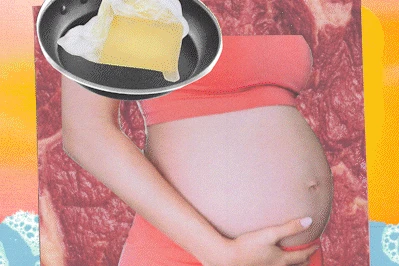
The Rise of the "Zero Trimester": How Social Media Turned Pre-Pregnancy Prep Into a Booming (and Controversial) Trend
Three years ago, 26-year-old Oregon wedding photographer Esther Rohr and her husband began planning for pregnancy. Instead of jumping straight into trying to conceive, Rohr made small but deliberate lifestyle adjustments to optimize her body: she shifted to earlier bedtimes, cut back on alcohol while upping her water intake, refined her fitness routine, prioritized protein in her diet, and added supplements like beef organ capsules and Vitamin D3. To improve sleep quality, the couple moved all phone chargers out of their bedroom to the kitchen, and started turning off their home Wi-Fi overnight after online research suggested it could impact cellular health.
Worried about exposure to reproductive toxins, Rohr also began the slow, meticulous work of swapping out every synthetic athletic garment, non-stick pan, and scented personal care product that might contain phthalates or other hormone-disrupting chemicals. She purchased an air purifier for her home and plans to eventually replace all her LED lightbulbs with incandescents, over concerns that LEDs disrupt her circadian rhythm.
Rohr has never attempted to conceive before, and has no known health conditions that would impact her fertility. Still, she is fully committed to optimizing her health to give any future child the "best chance at a healthy start in life." What started as casual browsing of "crunchy healthy fitness baby mama" content from creators like @vitallymelanie and @innate_fertility turned into a full feed of advice for easy, positive pregnancies and step-by-step tools to prepare for conception.
One of the creators she followed recommended the book 9 Months Is Not Enough, which is built around the idea that women face a widespread "fertility gap"—but that they can take action to close it. This message resonated deeply with Rohr. After overhauling her home and daily habits, she also opted for additional hormone testing and the controversial OligoScan, a device that claims to measure mineral and heavy metal levels in the body via a light frequency scan of the hand. When the test detected elevated mercury levels, Rohr spent a year working to lower them. She and her husband completed two rounds of Dr. Daniel Pompa’s "cellular healing diet"—a variation of the keto diet—and took six to eight different supplements every day.
"It was a brutal, brutal year," Rohr says. But she sees it as an investment in her future: "I need to be focused on giving my body the building blocks it needs. Right now, it's a huge, pivotal time to be giving it what it requires." By late December of last year, after three years of preparation, Rohr finally feels she is on the cusp of being "ready" to start trying.
The global cultural obsession with wellness and biohacking, led by high-profile male figures like Bryan Johnson and Peter Attia, has now expanded into the unregulated space of pre-conception care. Sociologist Miranda Waggoner first named this pre-pregnancy window the "zero trimester" in her 2017 book of the same name. Today, influencers frame pregnancy as a challenge you must train for, "like it’s a marathon," as creator Kaylie Stewart told her 1 million TikTok followers last fall. If you spend months planning a wedding, the argument goes, why wouldn’t you put the same effort into preparing for a baby?
A fast-growing community of influencers, holistic women’s health practitioners, doctors, life coaches, and nutritionists create content targeted specifically at the "Trying to Conceive (TTC)" demographic—including people struggling with infertility and those who haven’t even started trying yet. The core premise is simple: if you follow their wellness formula, you will conceive faster, have an easier pregnancy, and raise a healthier child. Proponents argue pregnancy doesn’t have to be traumatic, and you get to be in control. What expecting parent wouldn’t want that?
Currently, #preconception appears in over 106,000 Instagram posts, and #pregnancyprep in 36,000. Individual pre-pregnancy prep videos on TikTok regularly rack up tens of thousands—sometimes millions—of views and likes. "Pregnancy Prep" influencers share curated product lists, aesthetic vlogs, and "get ready with me" TikToks featuring glowing, happy content creators. They recommend a long list of lifestyle changes, niche products, books, courses, and "quick" tips to follow in the 6 to 12 months before getting pregnant. "Healthy pregnancy isn’t chance—it’s choice," is a go-to line for 29-year-old Alexandra Radway, a functional nutritional therapy practitioner who has posted pre-pregnancy prep content on her Instagram @alexandraradway since 2021.
Unsurprisingly, most of this content drives sales of products and programs. From brazil nuts marketed for "egg health" and grass-fed butter, to prenatal vitamins, pelvic floor Pilates, and non-toxic cookware, the list of required swaps and changes promoted on social media seems endless. Some tips are basic, while others are far more unorthodox. One of Radway’s favorite recommendations is watching the sunrise every morning. "It's the equivalent of, like, 2,500 Brazil nuts of antioxidants," she says. "Everyone's focusing on super foods. I'm like, ‘No, super sunrise.’"
While Radway’s advice may sound unproven, pre-conception health guidance is nothing new. Ancient cultures like the Spartans encouraged young women to train with wrestling, running, and throwing sports so that "the fruit they conceived might … take firmer root and find better growth." For millennia, traditional Chinese medicine and Ayurveda have used diet, detox practices like panchakarma, and acupuncture to boost fertility. Even the Bible includes passages encouraging sobriety before conception.
In modern Western medicine, leading groups including the American College of Obstetricians and Gynecologists (ACOG) published the first official pre-conception care guidelines in 1983, which stated that "preparation for parenthood should begin prior to conception." It wasn’t until the early 1990s that doctors began universally recommending folic acid use before and during pregnancy to prevent neural tube defects.
Social media has transformed pre-conception health from a quick trip to the pharmacy for prenatal vitamins into a full-blown industry. In 2019, a Harvard study went viral after claiming that carrying a baby to term is metabolically equivalent to running more than 12 marathons. By 2025, "pregnancy prep" content has grown into its own vibrant, self-sustaining ecosystem online. "Women seemed to recognize, ‘Hey, I have to sign up to run a marathon every single day, maybe I want to train for that,’" says Radway. "I would want to be in shape and be well nourished and maybe have a coach and be prepared."
Radway began posting after her own difficult first pregnancy led her to earn a degree in functional nutritional therapy, which focuses on holistic diet and lifestyle changes to address the root causes of health issues. She says her second pregnancy was a complete 180-degree improvement over the first, and she felt a "divine calling" to share what she learned with other women. "To me that was the most pressing problem in the world, and I felt like I was uniquely positioned to solve it."
The current fixation on optimizing the fragile "zero trimester" comes at a moment when the average woman is having children three years later than her mother’s generation—if she has children at all. While there is growing conversation about declining sperm counts sparked by a landmark 2017 study, which spurred its own male fertility optimization movement, latest data shows one in five women will experience infertility. Historically, the burden of infertility has always fallen on women, even as new research reveals the issue is far more complex than that.
Unsurprisingly, one recent report found nearly three-quarters of Gen Z adults struggle with fertility anxiety. This generation grew up with unlimited access to information about every high and low of conception and pregnancy, from candid infertility memoirs to "Girl Boss" thinkpieces about egg freezing; wearables that track everything from macronutrients to menstrual cycles; and the MAHA movement that stokes fear about environmental toxins and falsely claims maternal Tylenol use causes autism and ADHD in children. Pair that with the extreme rollback of U.S. reproductive rights after the overturn of Roe v. Wade in 2022—17 states now have full abortion bans or six-week bans that limit access to life-saving care—and you have the perfect conditions for a pregnancy prep obsession to take root.
In response, younger generations are saying: "I ought to be able to have a pregnancy which is healthy and safe and happy, and I ought to get the support I need to be able to do that," explains Lara Freidenfelds, a historian and author of The Myth of the Perfect Pregnancy: A History of Miscarriage in America.
"We're just a bit tired of it," says UK-based Sophie Payne, 33, of women not getting helpful answers about their reproductive health from mainstream medicine. At 27, Payne was diagnosed with premature ovarian failure and struggled for years to conceive. In 2022, she suffered multiple miscarriages. While she says no single change led to her successful conception in 2023, she believes working with functional health practitioners to adjust her diet and lifestyle helped. In early 2024, Payne and her sister launched a holistic pregnancy prep Instagram account called Curious_Clementine. "Sadly, when it comes to getting pregnant, we're not really told what to do, how to do that, and how to go into it in the best possible health for us, but also for our future children."
Not that long ago, expecting people learned about pregnancy and childbirth from older female relatives and community members. Today, many live far from their families in increasingly isolated societies, and figure things out as they go—often with social media as their main teacher. From the Paynes’ perspective, the desire for more control over one’s own health is the biggest driver of this trend. "They want to do their own research and do what they can to feel their best," Payne says. The sisters estimate half of the women who reach out to them have struggled to conceive or had a miscarriage, and are looking for simple lifestyle tweaks that could help. After all, a few nutritional swaps and supplements cost far less than IUI or IVF.
Rohr, one of 10 children with 29 nieces and nephews, has watched countless family members and friends navigate difficult pregnancies. That’s why she is determined to have a positive, empowering experience of her own. "I always thought having a baby was, like, the least casual thing ever," she says. "It just seems like this life-changing thing that I wanted to be super, super sure about."
Doctors generally agree that growing attention to pre-conception health is a positive development. Healthy mothers usually lead to better outcomes for both parent and baby. Currently, ACOG recommends that doctors ask patients of reproductive age if they plan to get pregnant within a year during routine checkups. "There's so many things that we can do to optimize underlying health in that preconception year that will make outcomes in pregnancy better," says Natalie Clark Stentz, an ob-gyn and reproductive endocrinology and infertility specialist at Michigan Medicine. This is especially true for people living with chronic conditions like diabetes, hypertension, depression, or thyroid disease that require careful management during pregnancy.
At the same time, doctors emphasize that reliable pre-pregnancy prep should be expert-vetted and science-backed—and it rarely involves buying products from TikTok Shop. A doctor’s pre-conception checklist is far simpler than what you’ll see online, and hasn’t changed much in decades: confirm all vaccinations are up to date, avoid alcohol, quit smoking and recreational drugs, start a prenatal vitamin with folic acid at least one month before conceiving to prevent neural tube defects, and review all prescription medications and supplements with your doctor. A 2025 study found that only 5% of pre-conception nutrition claims on social media align with current international pre-conception guidelines, and 54% have "no evidence to support their claimed health benefits." TikTok and Instagram had a higher share of unproven claims than any other platforms.
For example, raw milk is popular among natural wellness communities, but unpasteurized milk can carry dangerous bacteria like listeria, which can cause miscarriage or harm a developing fetus. Extreme diets and overexercising can also hurt fertility by disrupting the hormones needed for conception, says Kara Goldman, an ob-gyn and associate professor of reproductive endocrinology and infertility and director of fertility preservation at Northwestern University. Recently, a patient with a history of estrogen-receptor-positive breast cancer told Goldman she was taking beef organ supplements, only to discover when Goldman reviewed the ingredients that the capsules included ground ovary and uterus tissue. That meant the patient was accidentally consuming extra estrogen after years of carefully avoiding unnecessary estrogen exposure. Additionally, organ meats like liver are extremely high in Vitamin A, which Stentz says can be "very toxic" for pregnancy.
"Any buzzy individual thing is likely sensational, whether that's Brazil nuts, organ meats, or whatnot," Stentz adds. "The evidence-based things, they're not sexy. Maintain a normal BMI, stop smoking, pick a boring prenatal vitamin."
Pre-pregnancy regimens can also get very expensive very quickly. A month’s supply of Perelel’s "conception support pack," which includes a prenatal, omega DHA + EPA, and CoQ10 + folate, costs $58.77. A full swap of all kitchen Tupperware, utensils, and pans can run into hundreds of dollars. Add in soft movement classes like Pilates, organic produce, a full new set of non-toxic makeup and skincare, and the cost climbs even higher.
In a recent post, Radway explicitly called out to "the woman looking for a sign to start preparing her body for pregnancy in 2026," promoting her January Jumpstart, a "7-day winter reset to prepare your body, mind, and soul for pregnancy and birth." For $97, you can get her Baby Ready Body Book Bundle, and in December 2024, she offered her "Baby Ready Body LIVE" course for $1,770 that promises to "balance your hormones, boost your energy, calm your nervous system, and prepare your body for a healthy pregnancy." The course claims to not only optimize hormone health and teach followers how to cook nutrient-dense meals, but also "prepare your body to give your baby the best possible start."
"You're taking a very vulnerable, very highly motivated population of patients and targeting them with information that is kind of driven by financial incentives," says Goldman.
All this marketing often hides a key truth: even entering pregnancy in peak health is no guarantee of a positive outcome. For starters, we have "so little control over whether or not we're able to become pregnant or how easily we're able to become pregnant," says Stentz. Early pregnancy loss is "very, very common and unpreventable for the most part," adds Freidenfelds. "It is hard for people to manage the idea that you will try very hard to reduce risk, and yet you will not be able to completely forestall all bad outcomes."
This hyper-focus on women’s pre-pregnancy habits can also subtly shift the burden of infertility, miscarriage, and poor fetal health onto women’s shoulders. In reality, male biology plays a role in 30 to 40% of infertility cases. Under an Instagram post promoting a new book called 9 Months That Count Forever: How your pregnancy diet shapes your baby’s future, by French biochemist Jessie Inchauspé, "the Glucose Goddess," one commenter wrote, "I feel so much guilt for not eating well during pregnancy. Definitely a bit triggered by this …" Another commented, "Well I threw up sometimes 10X a day until she was born so … Prayers."
"It really can make women feel guilty or blame-worthy if their outcome isn't ‘perfect,’ however they're defining perfect," says Waggoner, an associate professor of sociology at Rice University. This trend promotes the idea that there’s a "causal and deterministic link between preconception care behaviors and birth outcomes, and that's where I think it can be problematic for both individuals and at a policy level."
Perhaps most importantly, Goldman wants to set the record straight: Infertility is a disease, and most causes can't be prevented or treated by lifestyle modifications alone. Over the past 25 years, Freidenfelds has watched fertility get reframed as something less biologically driven, and instead, something you can plan or try to "do well." When she started researching her book in the early 2000s, the term "trying to conceive," or TTC, was reserved for niche internet forums for women struggling with infertility. By 2018, women started using the term when they were simply planning to stop birth control the next month to try to get pregnant. "That's a very, very different scenario," she says.
Rohr doesn't yet know if she will struggle to get pregnant, but that hasn't stopped her from sharing her preparation with the world. In May of 2025, she began posting behind-the-scenes content of her own journey on TikTok, including one video titled "POV me and my husband decided to lock tf in and get fit before trying to get pregnant so I can have a healthy (& easier) pregnancy and our baby can have the best chance at a healthy start." The post went viral, racking up over 13.5 million views and 2.5 million likes.
Rohr knows that some of her "hacks" might seem bizarre or controversial. In fact, she started an entire series called "unhinged things we’re doing to prep for conception," after her friends expressed fascination with her routine. She even recently read the parenting book Hunt, Gather, Parent, focused on ancestral approaches to raising young children.
"The energy [in our home] is just like, all pointed in one direction," Rohr says. "Not knowing things is very uncomfortable for me." If all goes well, she hopes to have a baby by this Christmas.
What Say You?
Let us know what you think about this article in the comments below. Alternatively, you can submit a letter to the editor at [email protected].