
An Interview With Palantir CEO Alex Karp: Our Competition Isn’t Other Companies—It’s Politics
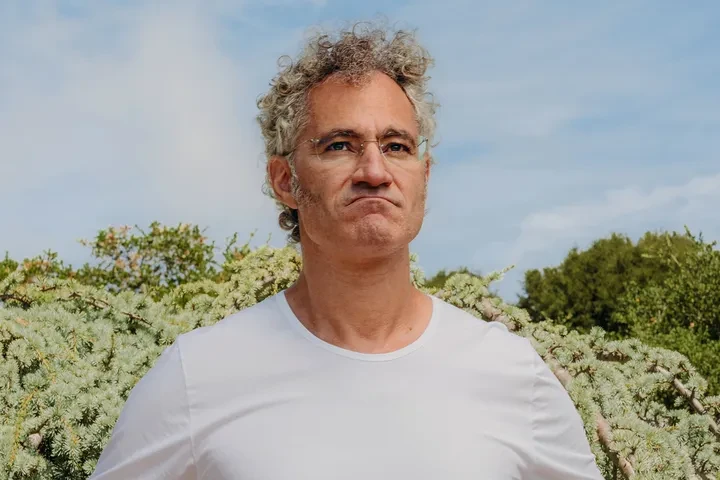
An Interview With Palantir CEO Alex Karp: Our Competition Isn’t Other Companies—It’s Politics
At first glance, Alex Karp and I have almost nothing in common. I work at WIRED, a publication that produces hard-hitting investigative reporting on Trump-aligned political circles; Karp is the CEO of Palantir, the $450 billion defense and technology giant that holds contracts with U.S. agencies including the CIA and ICE, and provided support to the Israeli military during its campaign in Gaza. I’m based in Manhattan’s East Village, while Karp spends most of his time on a sprawling 500-acre estate in rural New Hampshire. (He ranked among the highest-paid CEOs in the U.S. last year.) I studied English literature as an undergrad, while Karp holds a law degree and a PhD in philosophy, where he studied under iconic theorist Jürgen Habermas. I identify as a progressive; Karp dismisses progressive ideology as “pagan religion.”
But one unexpected bond unites us: we are both alumni of Central High School, Philadelphia’s elite public magnet school. (We didn’t attend at the same time; I’m a few years older than the 58-year-old CEO.) It was likely this shared connection that convinced Karp to sit down for an interview with me. Born to a Jewish pediatrician father and Black artist mother, Karp grew up struggling with dyslexia, and his time at Central marked a major turning point. He now even theorizes that overcoming that early learning challenge laid the groundwork for his later professional success.
We spoke at Palantir’s annual customer conference, an event that carried the upbeat, almost giddy energy of a top-tier multi-level marketing summit. The commercial customers I chatted with—from global giants like American Airlines to smaller, family-owned businesses—all agreed that Palantir’s AI-powered platforms come with a steep price tag, but deliver far more value than they cost.
Missing from the event’s main stage presentations were the clients that make up the bulk of Palantir’s revenue: the U.S. government and its allied nations. (The company refuses to do business with Russia or China.) Palantir was founded from the start to bring Silicon Valley’s cutting-edge innovation to defense and public sector technology. Earlier this year, Karp laid out his core philosophy in The Technological Republic, a new book co-written with former Palantir employee Nicholas Zamiska. A surprisingly accessible polemic, the book takes Silicon Valley to task for its lack of national loyalty. In Karp’s view, the anti-establishment messaging that defined Apple’s early Macintosh marketing was the original sin of a tech culture that prioritizes self-indulgent individualism and ignores the national interest. Opening his conference keynote, Karp—dressed casually in a white t-shirt and jeans—put it bluntly: “We’ve clashed with Silicon Valley on and off ever since we were founded 20 years ago.” In 2020, Karp moved Palantir’s headquarters from Palo Alto to Denver, turning the company into Colorado’s most valuable corporation.
Critics often paint Karp as a villain building a dystopian surveillance state, and he pushes back against that backlash aggressively, bluntly, and without any apology. After decades of public sector contracts, Palantir has (by the U.S. government’s own accounting) proven its tools can effectively harness data for battlefield operations and intelligence work. The company holds a multi-million-dollar contract with ICE to support “targeting and enforcement” work, which essentially means helping the agency locate undocumented people for deportation. Karp says openly that Palantir’s tools have helped deliver lethal firepower in Ukraine, and he says he’s proud of that work. Palantir maintains a public Code of Conduct that pledges the company will, among other commitments, “protect privacy and civil liberties,” “protect the vulnerable,” “respect human dignity,” and “preserve and promote democracy.” Last May, 13 former Palantir employees published an open letter accusing the company’s leadership of abandoning its founding values and being complicit in “normalizing authoritarianism under the guise of a ‘revolution’ led by oligarchs.” Karp has also acknowledged that other employees have left the company over its work with the Israeli military. His go-to response to critics, internal and external: if no one opposes you, you’re probably not doing anything that matters.
Beneath his unapologetic, combative defense of Palantir, I got the sense Karp deeply wants to be understood. He noted that most interviewers only want to ask him about three topics: ICE, Israel, and Ukraine. I did want to cover those issues (and we did), but our conversation also wandered to Donald Trump, the future of democracy, his lifelong love of German culture, and yes, our shared alma mater.
STEVEN LEVY: I understand your time at Philadelphia’s Central High was a life-changing experience for you.
ALEX KARP: I took an IQ test for the school’s gifted program. My parents never pressured me to get straight A’s growing up. But when the program director, Mrs. Snyder, looked at my results, she told me: “It’s obvious you’re dyslexic, but someone with your IQ shouldn’t be getting Bs—you need to earn all As.” That’s when I went from being a good student to an exceptional one. She really did change my life.
LEVY: A lot of people still say it’s hard to pin down exactly what Palantir does. Can you explain it in your own words?
KARP: If you work at an intelligence agency, you use our software to hunt for terrorists and organized crime groups, while keeping your country’s data secure and protected. Then there’s special operations: how do you track where your troops are? How do you get them in and out of the battlefield as safely as possible, avoiding mines and enemy positions? Then we have our commercial line of business. Put simply: if you’re working on anything that requires operational intelligence, whether that’s advanced analytics or AI, you’ll likely need a product like ours.
LEVY: Essentially, you specialize in using AI to organize and orchestrate data, which is something Silicon Valley companies all claim they want to do. But you argue no one does it as well as Palantir.
KARP: What I’m saying is, we actually know how to deliver on that promise. If you find another company that can do what we do, and you’d rather work with them, go buy from them.
LEVY: Do you see any other companies as direct competitors?
KARP: Our competition isn’t other companies—it’s political. The woke left and the woke right wake up every single day, plotting how to damage Palantir. If they gain power, they will hurt us. And this isn’t just a U.S. issue, it’s global. I consider myself a member of the Democratic Party, but if the Mamdani wing of the party takes control? If that’s what my party becomes, I’m out. Then there’s the woke right, which believes everything is a conspiracy, that any use of government technology will only be used to attack and destroy ordinary Americans. Palantir’s software is literally the hardest in the world to abuse, but they still don’t want anything to do with us. If you reject meritocracy, you hate Palantir. That’s our real competition.
LEVY: I’m a little confused—how did Zohran Mamdani get tied into this?
KARP: When you tell the world that human labor will soon be worthless, people will end up electing the most ridiculous candidates imaginable. People are terrified of a future shaped by AI and AGI where no one has a job. Elite universities and institutions have had a corrosive effect on this conversation. They’re teaching what I call pagan religion—a new faith that requires human sacrifice. And who’s the sacrifice? Me. I’m the sacrifice they want.
LEVY: You don’t exactly seem constrained by that. The company is doing incredibly well.
KARP: I’m not complaining. We aren’t victims at Palantir. We’re doing extremely well, and we might even do better in the future.
LEVY: In your book, you heavily criticize that most big tech companies lack sufficient patriotism. Can you expand on that?
KARP: From day one, we’ve clashed with Silicon Valley because we’re pro-America, pro-West, and committed to making the U.S. government work effectively. That was extremely controversial in Silicon Valley back when we started—it was seen as unprofitable, a loser’s game. We won that fight. I actually think Silicon Valley has become patriotic now, at least in private. Silicon Valley has always been pro-meritocracy, which we align with completely. Where we still disagree is that we believe in deploying large language models in a way that creates real, tangible value, and also supports working people. When everyone else turned their back on the U.S. government, we walked toward it. That’s how we ended up powering Maven, the U.S. military’s AI battlefield program.
LEVY: Palantir has been involved in the war in Ukraine from the very start. What has that conflict taught you about the future of warfare?
KARP: I can give you that answer off the record.
LEVY: This is an on-the-record Q&A, so off the record won’t work here.
KARP: Then I’ll give you the on-the-record version, which is almost identical. Broadly, at the start of the war, it was clear we needed software that could coordinate small unmanned systems. But then the Russians started jamming all electronic devices. The big lesson that came out of that is that the only thing that really matters is the ability to cut through that jamming, and get your system to deliver its payload. So it’s all about being able to communicate with the device, plan its route, and collect intelligence from it. That’s a very different way of waging war than we’ve seen in the past.
LEVY: Does that make war scarier?
KARP: I look at it this way: who will be scarier, America or our adversaries? This new type of warfare requires advanced satellites, the ability to coordinate with those satellites, and specialized software and large language models. This is an advantage for America, because we’re the global leader in all those areas.
LEVY: Palantir has a very distinct culture—some critics even call it a cult. How much do you intentionally cultivate that outsider mindset? We’re both from Philadelphia, remember Jason Kelce’s line after the first Super Bowl win: “No one likes us, we don’t care.” Does that track for you?
KARP: People don’t realize that being an outsider has huge advantages. It’s not fun to be unpopular, honestly—I don’t like it. But it attracts the best people in the world. When someone posts some ridiculous nonsense about Palantir online, five people will see it, and the fifth one will think, it can’t be that simple—this is an interesting company, they’re thinking about the complex layers of a problem, not repeating the simplistic garbage from someone online who has no idea how our products actually work. That’s exactly the kind of person we want working for us, buying our products, or investing in us. No country in the world has a worse view of Palantir than France, but we have some of the best French employees in the world working for us, even though people claim we’re a front for the CIA—which is total nonsense, by the way.
LEVY: You may not be a CIA front, but you do work for the CIA and ICE.
KARP: ICE came much later. Our first contracts were with U.S. intelligence, our biggest contracts ended up being with the Department of Defense, and we started working with Homeland Security under a Democratic administration. Now it’s controversial because of Trump.
LEVY: It’s controversial because the current administration is doing things we haven’t seen before, especially with ICE. Your corporate code pledges support for democracy and opposition to discrimination. Do you monitor how your products are being used to make sure they don’t violate that code? Is there any line a president could cross that would make you walk away?
KARP: I was the first CEO to publicly say we would never build a registry of Muslim people. [Editor’s note: While Karp was not technically the first tech CEO to make this statement, it carried unusual weight given Palantir’s government work.] I’m a vocal defender of Israel, so people are always shocked when I say that. I can’t go into detail, but I have pulled our products from U.S. government programs when I thought something like that was happening. You and I probably disagree on ICE because I spent most of my adult life living in Germany. I’m skeptical of open borders. I personally believe that a country’s citizens get to decide their own immigration policy through their votes. I grew up in a progressive family, but people my age and older were deeply skeptical of mass immigration. Open borders is not a progressive policy—it never has been. Look at what relaxed border policies have done to Germany across every metric.
LEVY: To ask again: Are you monitoring what’s happening to U.S. democracy right now, and asking whether you need to take a closer look at how your tools are being used?
KARP: Let me reframe this: Have I ever rejected business opportunities because they violated our core values? Yes. I’ve done that with commercial work, and I’ve done that with government contracts. We get no credit for this, but we almost went out of business early on because we refused to work in Russia or China. Do I agree with your implicit claim that U.S. immigration policy today is unprecedented? No. Do you know what happens if you overstay your visa by even one minute in Japan? You’re put on a plane out of the country immediately. [Editor’s note: Japan’s immigration detention policy has drawn widespread criticism from domestic and international groups for its practice of detaining thousands of immigrants indefinitely.] I do think this is exactly the right question you’re asking: if our product was used to commit civil rights abuses, would I step in? Yes, and our product is the hardest in the world to abuse for that purpose. Do I agree with all the claims you’ve implied here? No. But you’re asking the right question, and I’m telling you: I’ve done it before, and I’ll do it again.
LEVY: Does your Jewish background shape Palantir’s support for Israel?
KARP: I don’t “give” support to Israel—we sell them our product like any other allied nation. Look, you’re asking whether we’re defined by our identity or by our ideas. I think it’s always both. I see myself as an outsider, so of course there’s an element of personal identity here. But I’d like to think that my support for Israel is tied to a broader defense of Western values, not just a reflection of my own background.
LEVY: A lot of Jews, myself included, feel a connection to Israel but also believe what’s happening in Gaza is unacceptable.
KARP: If you have five Jews, you’ll get 50 different opinions. The question for Palantir isn’t whether we agree with every single small decision Israel makes—it’s whether we support Israel’s right to exist as a nation.
LEVY: This isn’t a small decision we’re talking about.
KARP: Israel is a country with a smaller GDP than Switzerland, and it’s under massive attack. Some critiques are legitimate, but others are just unfair, aggressive attacks on the entire country. My reaction is that if people are going to attack Israel indiscriminately, I’m going to defend it. When people treat Israel fairly, like they would any other democratic nation—something I don’t see happening right now—I’ll be far more willing to say publicly the things I say privately to Israeli leaders.
LEVY: When you got that open letter from 13 former employees saying your leadership has enabled authoritarianism, do you take that criticism seriously?
KARP: You have to fairly consider every critique lobbed at you, even the unfair ones. When The New York Times says we’re destroying human rights, blah blah blah, that’s complete nonsense. Everyone knows it’s nonsense, even the people writing it know it’s nonsense. I do fairly consider critiques from former and current Palantir employees. Any leader making decisions all day long is wrong sometimes. But if you attack me irresponsibly, that just makes my position stronger.
LEVY: Do you have a personal relationship with Donald Trump?
KARP: It depends on how you define “relationship.” He’s the president of the United States, and I respect that office. I agree with him on some issues, and I disagree with him on others, probably.
LEVY: Do you personally like him?
KARP: I think he’s done a much better job than most people think he has.
LEVY: Let’s not frame it around what I think.
KARP: Your question isn’t neutral, I can tell. Talking to you about this is just like talking to my own family. This is exactly where my family and I disagree: on border policy, on Israel, on Ukraine. I get yelled at about those three issues every single day. If we’re being honest, I think Trump’s decisions on AI and his decisions on the Middle East are very different from what any Democratic president would have made, and they’re very good decisions.
LEVY: Let’s go back to your early days. You’re an unusual CEO—you don’t have a technical background. You went to Stanford Law School, never practiced, then moved to Germany to get a PhD in philosophy. What do you think Peter Thiel saw in you that made him pick you to lead his new defense startup?
KARP: Only God knows for sure, but my best guess is that it’s the same instinct that made Peter the best value investor in the world: he looks for people who can see the long-term, complex ripple effects of a problem in business. And we were friends already. I think we also share that Germanic inclination to think through the far-reaching consequences of any decision. There’s a lot of German culture woven into Palantir—our whole process of digging deeper and deeper into a problem, what we call the Five Whys, that’s very Germanic. That commitment to rigor, to figuring out if something is actually true or definitely false, that comes directly from my education in Germany. I think our high standard for quality also comes from the authors I read and the people I worked with there.
LEVY: It seems like Germany has always had a special hold on you personally.
KARP: I just fit in really well there. Let’s just say, in Germany, if you meet someone you like, you don’t have to run around pretending you love them after the first date. You can date someone for years, and just be honest about how much you care