
OpenAI’s Second CEO Fidji Simo On Building a Profitable AI Business, Chronic Illness, and Why “AI Slop” Isn’t All Bad
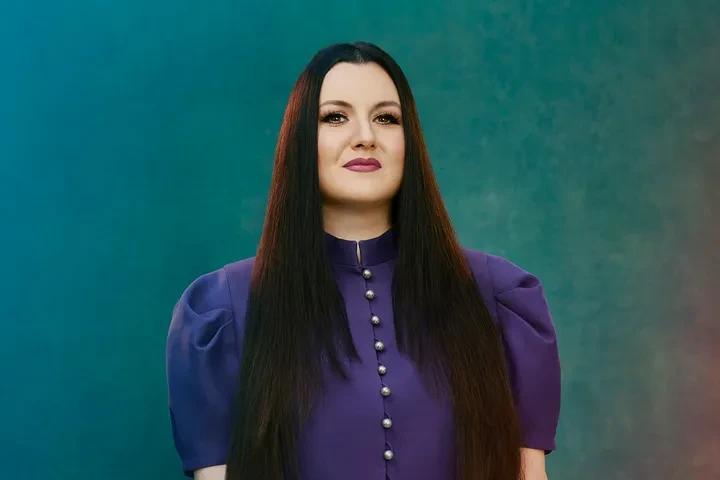
OpenAI’s Second CEO Fidji Simo On Building a Profitable AI Business, Chronic Illness, and Why “AI Slop” Isn’t All Bad
OpenAI’s already unusual corporate structure—a non-profit overseeing a for-profit that later reorganized as a public benefit corporation—just got even more unconventional: it now has two CEOs. Sam Altman leads the entire organization, overseeing core research and computing infrastructure. Since this summer, former Instacart CEO Fidji Simo has served as the second CEO, heading up every other part of the business.
Since Simo joined as CEO of Applications in August, she’s rarely been spotted at the company’s San Francisco headquarters. But her influence ripples through every level of the organization, most notably because she leads ChatGPT and nearly every revenue-driving function at the firm. Simo is currently managing a flare-up of postural orthostatic tachycardia syndrome (POTS), a condition that causes fainting if she stands for extended periods. For now, she works remotely from her home in Los Angeles, and stays constantly connected via Slack.
“I’m online from 8 a.m. to midnight every day, and I respond within five minutes,” Simo told me. “My team feels I’m here, that they can reach me immediately, and I’ll jump on a call in minutes.” OpenAI employees confirm this holds true. The company’s famously Slack-reliant culture can overwhelm new hires, but that’s not the case for Simo. Staff say she regularly pops into different channels and threads, shares input, and asks questions across the organization.
Simo joined OpenAI during a period of explosive, all-direction growth. The company is currently pursuing sovereign AI agreements with foreign governments, rolling out new base models, locking in retail partnerships, signing multi-billion dollar computing infrastructure deals, developing custom chips, working on a secret hardware project, and of course, scaling ChatGPT. “We don’t fight over who gets more scope,” Simo says. “We fight to cut scope.”
Outside Silicon Valley, Simo’s hire came as a surprise. But for industry insiders, it was far from a shock. Born and raised in Sète, a small fishing town in the south of France, Simo first made her name leading the main Facebook app at Meta before taking the top job at Instacart in 2021. She took the grocery delivery startup public two years later, earning a reputation in the Valley as a product visionary who can scale consumer apps to a global audience.
That’s exactly what she’s at OpenAI to do: turn the company’s groundbreaking research breakthroughs into profitable, must-have consumer products. She faces steep competition from tech giants like Google and Meta, plus a wave of AI startups founded by former OpenAI employees including Anthropic, Thinking Machines Lab, and Periodic Labs. “What keeps me up at night is that our models are far more intelligent than the number of people actually using them,” Simo says. “My job is to close that gap.”
Since joining, Simo has overseen the launch of Pulse, a tool that syncs to users’ calendars and delivers personalized insights based on their schedule, chat history, and preferences. She’s also launched an AI certification and job platform that helps workers train for AI-ready roles, and doubled down on improving how ChatGPT responds to users experiencing acute mental health crises. Industry sources say she will ultimately lead the rollout of advertising in ChatGPT’s free tier.
We spoke at Simo’s sunlit modern farmhouse, where she lives with her husband Rémy, a former engineer who now makes artisanal chocolate full-time, and their 10-year-old daughter. A stack of pastries and a box of Rémy’s homemade chocolates sat on the table between us.
It’s a peaceful setting for the leader helping steer what may be the most ambitious startup on the planet. While OpenAI’s core mission is to ensure artificial general intelligence benefits all of humanity, Simo’s goal is to build and scale the consumer and enterprise tools that make that mission a reality. The big question hanging over both her and OpenAI is whether that core mission can coexist with a profitable business model. This interview has been edited and condensed for clarity.
Zoë Schiffer: You serve as CEO of Applications, and report directly to Sam Altman. What has your working dynamic been like so far?
Fidji Simo: Sam wanted to free up his time to focus exclusively on research and computing infrastructure, and my job is to make that possible. He recognized that OpenAI grew out of a research lab, but it’s now a critically important product company — and that requires a different set of skills. I see my role as making that product side of the business incredibly successful, while still preserving the original research lab culture that makes OpenAI unique.
ZS: When you took this role, did anyone do a formal reference check on you?
FS: [Laughs] I think Sam had been checking references on me for three years. We ran in the same industry circles, so he already knew my reputation. I don’t think he literally picked up the phone and asked, “Is she for real?”
ZS: I was going to ask if Mark Zuckerberg was one of your references…
FS: Mark has been an incredible supporter throughout my career and has given me references many times. For this specific role, I don’t think Sam called him.
ZS: You’ve talked before about how you took major risks at Meta, even putting your role and reputation on the line at times. What risks do you think OpenAI should be taking right now?
FS: Well, taking this job already felt pretty risky to me [laughs]. That said, I think one thing we didn’t do well at Meta was proactively anticipate the societal risks that our products would create.
At OpenAI, those risks are very real. Mental health and the future of work were the first two priorities I took on when I joined. When I looked at the AI landscape, it was obvious we needed to address mental harm immediately, and that jobs would face major disruption — and we have a role to play in minimizing that disruption.
This isn’t easy, because there’s no existing playbook for it. It’s an enormous responsibility, but I think we have both the culture and the priority on this issue to address it head-on from the start.
ZS: How do you think OpenAI is doing on addressing mental health risks right now?
FS: Just in the last few months, we’ve massively cut down on the number of harmful unhelpful responses related to mental health. We launched parental controls with some of the strongest protections in the industry, and we’re working on age detection tools to protect teen users.
At the same time, we have 800 million weekly users, and we know many people in acute mental distress turn to ChatGPT for help. Getting it right every single time is exceptionally hard. Our goal is to catch as many harmful interactions as possible, and constantly refine our models to do better.
ZS: If you had to grade OpenAI’s current progress against your end goal, what would you give it?
FS: We’re never going to reach a point where we’re “done.” Every week, we launch new features, and new edge cases emerge that create new safety challenges. A good example is mania. When you look at chat transcripts, someone might say, “I feel amazing, I haven’t slept in two days, I’m on top of the world.” On the surface, that sounds fine, but a clinician would recognize that as a sign of mania that needs intervention. We work directly with psychologists to learn to spot those signals, and get users the help they need.
False positives are also a problem. If you’re just a healthy person excited about something, and ChatGPT flags you for mania, that’s a terrible experience. This is a really nuanced space, and we’re working as carefully as we can, with lots of input from outside experts, to get this right.
ZS: OpenAI is one of the most valuable startups in the world, if not the most valuable — but it’s also losing billions of dollars every year. What opportunities do you see to get the company on a path to profitability?
FS: I’ve noticed [laughs]. It all comes down to the size of the addressable market and the value we deliver to users in each market. In the past, only wealthy people could afford a team of personal assistants: a personal shopper, travel agent, financial advisor, health coach. With ChatGPT, we can give that kind of support to everyone. That’s incredibly valuable, and we’ve barely scratched the surface of what we can build. If we deliver that value, people will pay for it, and revenue will follow.
On the enterprise side, we already sell API access and ChatGPT Enterprise, but that product is just a thin layer compared to everything we could build for business customers. When you think about building custom AI agents for every industry and job function, there’s so much room to grow, whether we build those tools ourselves or enable third-party developers to build on top of our platform.
So the market is huge, and the value we can deliver is huge. That’s the basic formula for sustainable monetization. The real question isn’t revenue — it’s whether we’ll have enough computing infrastructure to deliver on all these products.
ZS: OpenAI has signed hundreds of billions of dollars in deals to build out new data centers. Critics worry not just about the massive scale of these deals, but that the deals have a circular dynamic, and that too much of the U.S. economy is now tied to OpenAI and Nvidia. What’s your take?
FS: First, a lot of people look at these deals and say they’re massive, but from inside the company, we’re already so constrained by GPU supply. If we had more GPUs, we could do so much more. These deals are clearly the right call. We have a full pipeline of products that will consume all that compute. From the outside these deals look risky, but from the inside, the far bigger risk is not investing enough in compute right now.
The companies we’re making these deals with are extremely sophisticated. They’re offering these terms and this financing because they’re close partners who understand our business really well.
Take Pulse, for example, which we launched for ChatGPT Pro subscribers. I want to make it available to everyone, but right now compute constraints mean we can’t. That’s just one example — we have 10 more products like that waiting in the wings.
ZS: How do you use Pulse yourself?
FS: It’s been incredibly helpful for both my work and my health. Every morning, it pulls new research related to my POTS and summarizes it for me. Before, I’d have to dig through medical journals to find that information myself. Now it’s all laid out clearly in one place.
It does the same for work. Staying on top of every new development in AI is a full-time job on its own, and having Pulse deliver a quick daily summary of what’s happening in the industry saves me so much time. My husband is an artisanal chocolate maker, and he was designing an advent calendar recently. Pulse suggested he hide a unique message in every window, and he thought that was a brilliant idea.
ZS: You’re an extremely successful leader, and you also live with a chronic illness. What have you learned from balancing these two parts of your life?
FS: That’s a good question. I never wanted my disease to get in the way of my mission. If you’re able to bring your full self to a job, you can work out a lot of accommodations that make it possible. I recognize I’m incredibly lucky to have worked at companies that have been supportive of me, and that’s not the case for everyone with chronic illness.
Most people never see a senior leader with a chronic illness be open about their condition, so a lot of people assume it’s impossible to hold a senior role and live with chronic illness. After I went public about my POTS, so many people reached out to me and said, “I didn’t know this was possible for me too.”
To be clear, it’s not easy every day. I’d much rather be able to do all the things I’d do if I didn’t have this condition. But it’s about determination and prioritization. It’s also made me aware of product opportunities I never would have seen otherwise. My personal experience with health issues has helped me focus on the tools we can build to improve healthcare for everyone.
ZS: You got sick when you were at Meta, right? After a very difficult pregnancy?
FS: Yeah. I was on bed rest for five months. I needed surgery during the pregnancy to stop premature labor, I started having contractions at four months. I was at real risk of losing my daughter. I worked the entire time I was pregnant, actually. My husband still has photos of my 40th birthday, where I was holding a Zuck product review from my bed. Back then, working from home wasn’t normalized, and I even presented on Facebook Live from bed. I made it through, but I came out of that pregnancy with POTS. Then I had endometriosis surgery in 2019, which made my POTS much worse. Basically, I’ve had ups and downs ever since, but 2019 was when the condition became really severe for me.
It’s funny, you’d think I’d have thought through this question before, but so few journalists ask about this that I haven’t had to answer it much.
One of my personal missions is to help everyone realize their full potential. I want a world where health conditions don’t hold people back — either because we cure them, or because companies offer accommodations, or technology makes it easier to work around them. If I’d gotten sick much earlier, before Zoom was a normalized thing, this would have been so much harder. I feel for all the people who have so much to offer the world, but their health gets in the way.
Constraints also force you to be more creative. These really difficult physical limitations have forced me to be far more intentional about how I lead.
ZS: OpenAI is famously a very in-person culture. How do you build trust with your team when you can’t always meet them face to face?
FS: What helped the most was being completely transparent from day one. On my first day, I sent a message to every employee explaining my condition in detail, because invisible illnesses are really tricky. If you see me in person, I look fine. I explained, “I’d love nothing more than to be in the office more right now, some days I can make it in, and some days I have to work reclined because of my health.” That actually built a lot of trust. It put vulnerability out there from the start, which isn’t easy. It was risky to share that when I was a new hire, I agonized over it for a couple weeks.
I also work really hard to be present in other ways. OpenAI is an in-person culture, but it’s also a very Slack-first culture. I think I’m more accessible than I would be if I was running around the office all day. I really hope this flare-up ends so I can be in the office more, but what I’m doing now has worked so far.
ZS: I’ve heard from multiple people that your Slack presence is next-level.
FS: [Laughs] If journalists know that, I don’t know if that’s a good thing.
ZS: Part of your mandate is figuring out how advertising would work in ChatGPT. What would that look like, and what’s your timeline for rolling it out?
FS: Advertising works really well when there’s strong commercial intent, and we already have a ton of that — people come to ChatGPT every day asking for shopping advice. The most important thing before we even consider rolling out ads is to make sure our commerce experience is excellent, that people can explore all the products they want and get great recommendations.
ZS: Are you already recommending paid products when people ask for shopping advice right now?
FS: No.
ZS: OpenAI has incredibly rich user data, combining people’s work lives, their most personal thoughts, their habits, and their product needs. That data is extremely valuable to advertisers. How are you thinking about user privacy as you scale any ad products?
FS: Whatever we do has to be extremely respectful of user privacy. That’s why we haven’t announced anything about ads yet — if we do launch ads, it will have to be a very different model than what’s been done before. What I learned from building ad platforms earlier in my career is that what people hate most about ads isn’t the ads themselves — it’s how their data is used to target them.
ZS: You were prepared for that question!
FS: I’ve been asked it many times by now.
ZS: OpenAI is expanding into so many different directions at once. Do you see a risk that the company is trying to do too much?
FS: My whole role is to minimize that risk. The solution is simple: we attract the best possible talent, so instead of one person leading 15 projects, we have the best possible leader for every single initiative. I’m extremely focused on hiring to make sure we have the right people in place.
We believe every category of software is going to be reinvented for AI, and we have a role to play in making sure all the products we use in the future are AI-native, built for AI from the ground up. That does require this level of ambition, and building the capabilities to deliver on that ambition is exactly my job.
ZS: Sora, OpenAI’s text-to-video model, launched with a relatively small set of safety features and guardrails. What was the reasoning behind that approach?
FS: I actually think Sora launched with a pretty strong set of safety features. We rolled out parental controls that let parents control how their kid’s likeness can be used, and what hours they can use the app. I think the controls we have for likeness usage, even for adult users, are really advanced and thoughtful.
That said, this is a completely new form of media, so we’re still learning and refining based on user feedback.
ZS: There was a sense that OpenAI was more reactive on the copyright questions around Sora. What’s your response to that?
FS: What we’re hearing from copyright holders is that most are actually really excited about this new medium, and about what it can do to put their IP in fans’ hands in a way that boosts engagement. But they do want to make sure the value exchange is clear and fair, and we want that too.
ZS: A lot of people have criticized Sora output as “AI slop.” What do you say to that?
FS: Every new form of media goes through growing phases. When it first launches, it just imitates what already exists. Think of cinema: when it was new, it was just recording people performing on stage, before anyone invented close-ups or different shot types. We’re in that same phase right now — AI is still learning to copy human output, and sometimes it’s worse than what humans can make. What I’m excited about is when we move to the next phase, where creators experiment with what’s unique